What the program is
경희대학교's 맞춤형 글쓰기 프로그램 is a short, intensive academic-writing course for international students. It is not TOPIK preparation. It covers the writing a Korean degree actually demands: an email to a professor, a 서술형 exam answer, a summary built from a source text, and a short report.
This round ran on 7 and 8 September 2026 — two sessions of three hours each, 44 international students, taught in person and in Korean by Shamshod, MyTOPIK's founder.
It was the fourth program MyTOPIK has run with Kyung Hee this year. It was also the first one that ran on our platform from start to finish.
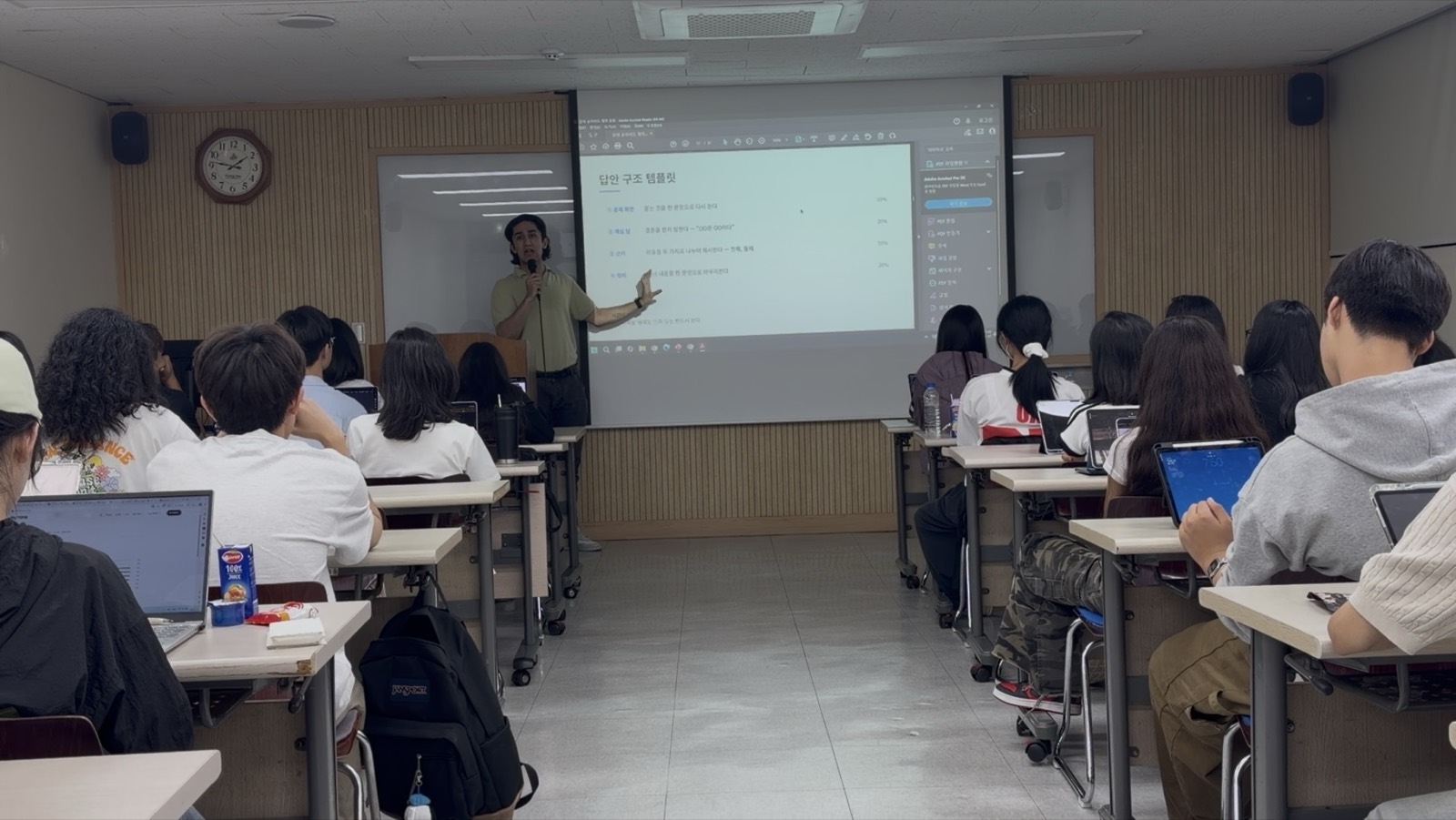
The students asked for it
The first three programs were arranged the way pilots usually are: proposed, scheduled and staffed by the people who wanted the pilot to happen.
This one came from the students.
Not from MyTOPIK's side, and not from the university's program office. A cohort that had already sat through this kind of class asked for another one. A pilot that gets renewed tells you the buyer is satisfied; a cohort that asks for the next session tells you something else, and it is the reason this post exists.
What "fully on MyTOPIK" means
In the earlier three programs the platform was used in pieces — a quiz in one segment, a single writing task in another, the rest of the three hours on slides and paper. Each time a little more of the class moved across.
On 7–8 September, both sessions ran on it end to end: every practice block, every check, every correction.
Realtime Class
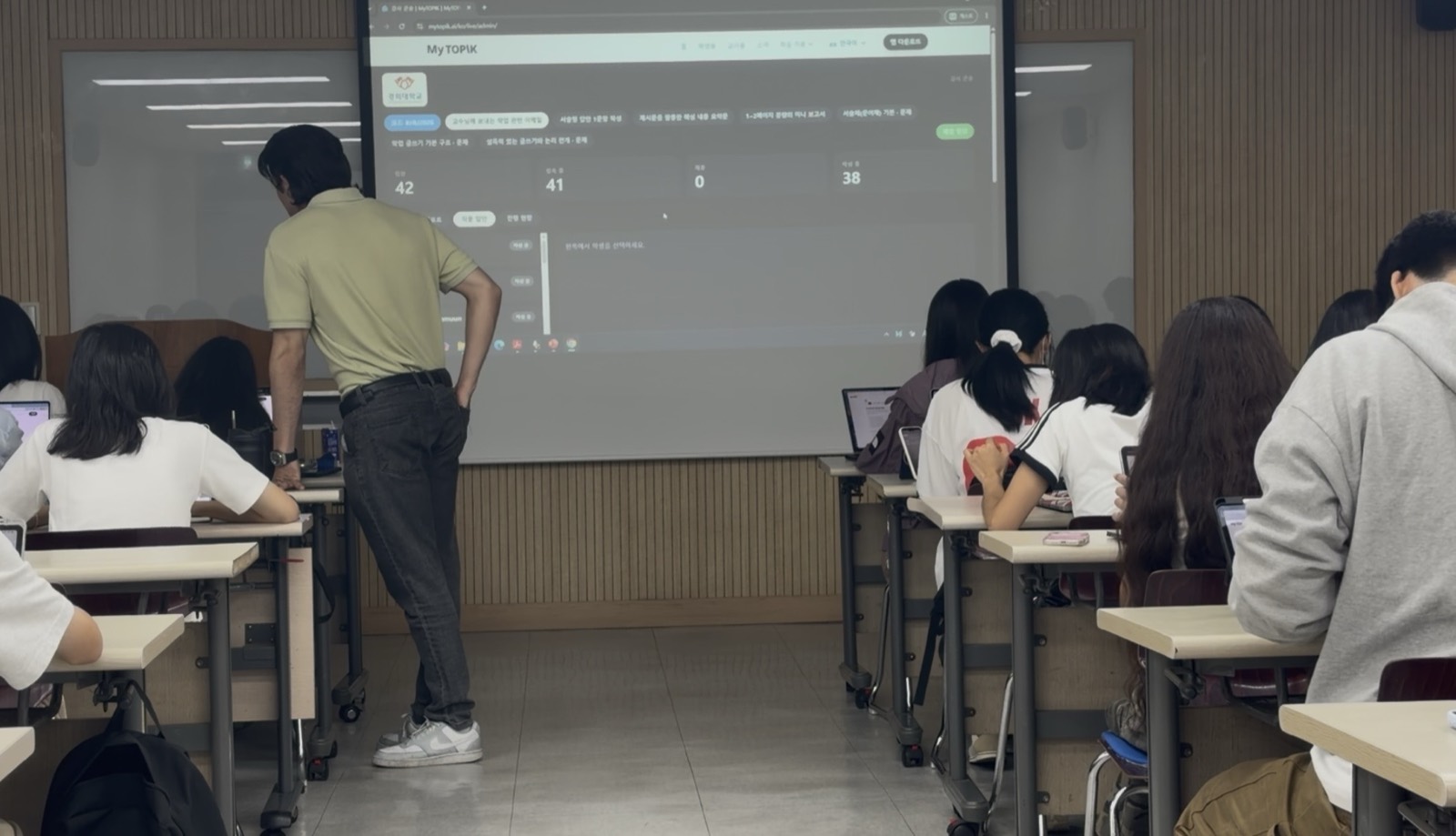
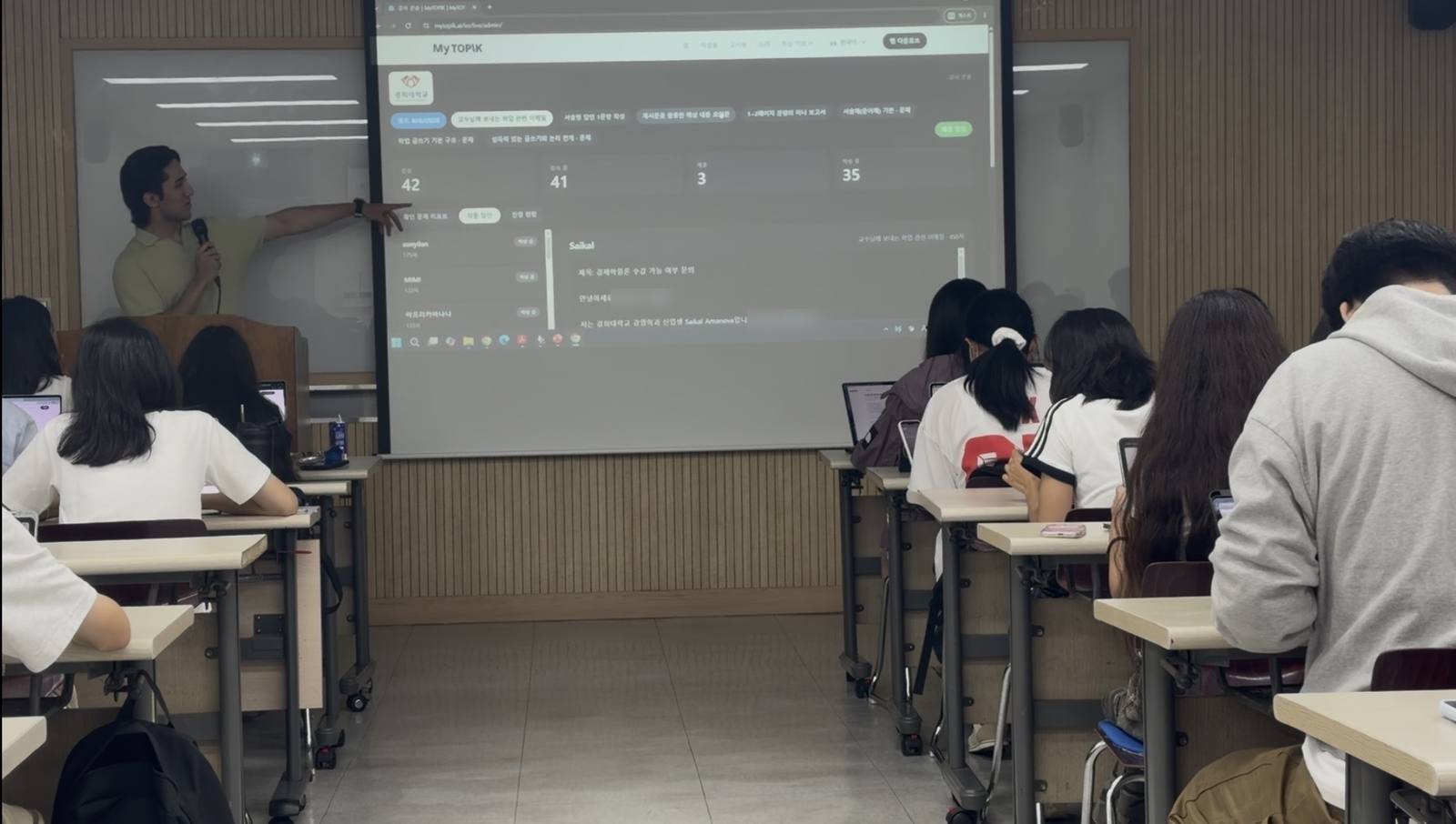
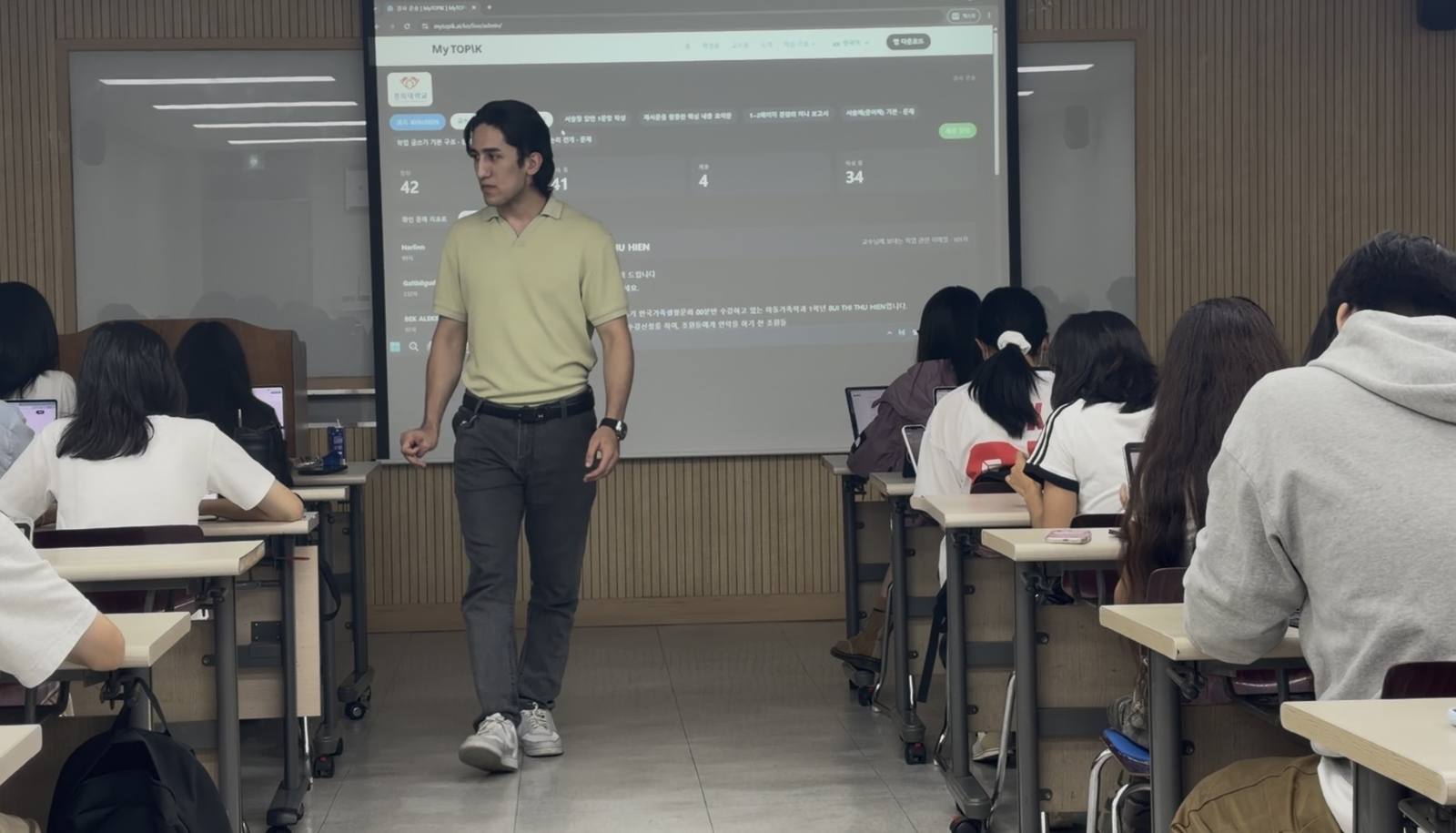
Realtime Class is the B2B product this program tested. It turns a lecture hall into a live writing workshop, where one lecturer can see, mark and answer 44 pieces of writing while the class is still running.
How a session works
- Students join from their own phones with a room code. No app to install, no account to create.
- The lecturer pushes the active task, and it appears on all 44 phones at once.
- A writing task shows three things together: the prompt, the checklist it will be marked against, and 「바로 쓰는 문장 틀」 — ready-made sentence patterns for students who know what they want to say but cannot start the Korean sentence.
- Drafts autosave to the server every few seconds, and to the phone as well. Forty-four students on university wifi, writing for thirty minutes: a dropped connection costs nothing.
- On submit, the piece appears on the lecturer's projector view immediately.
Those sentence frames are a small thing that removes a large blocker. A student stuck at a blank page is usually stuck on form, not on thinking:
…은/는 ~라고 할 수 있다.
… can be said to be ~.
Opening a 서술형 answer
그 이유는 ~기 때문이다.
The reason is that ~.
Giving the reason
그 대표적인 예로 …를 들 수 있다.
A representative example is ….
Bringing in evidence
Every frame is already in 서술체, so a student who uses one gets the register right for free.
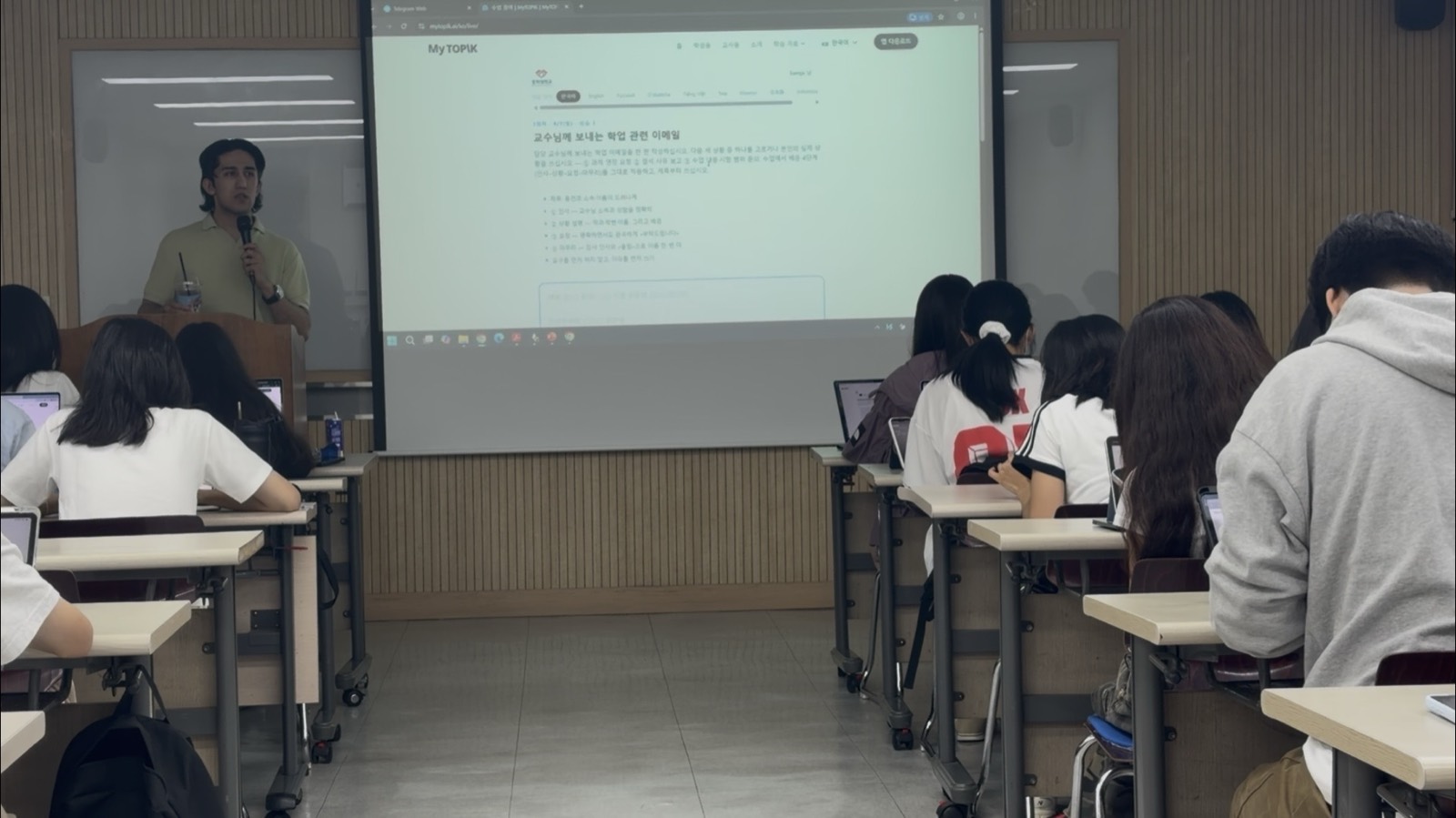
Corrections, and who signs them
This is the part we were most careful about.
The system drafts feedback on each piece against the lecture's own rubric — the same checklist the student was shown before they started writing. What a student is marked on cannot drift away from what they were told.
That draft goes to the lecturer, not to the student. The lecturer edits it, replaces it, or writes their own. Nothing generated reaches a student unless a human puts it there.
Quizzes, and the language they are explained in
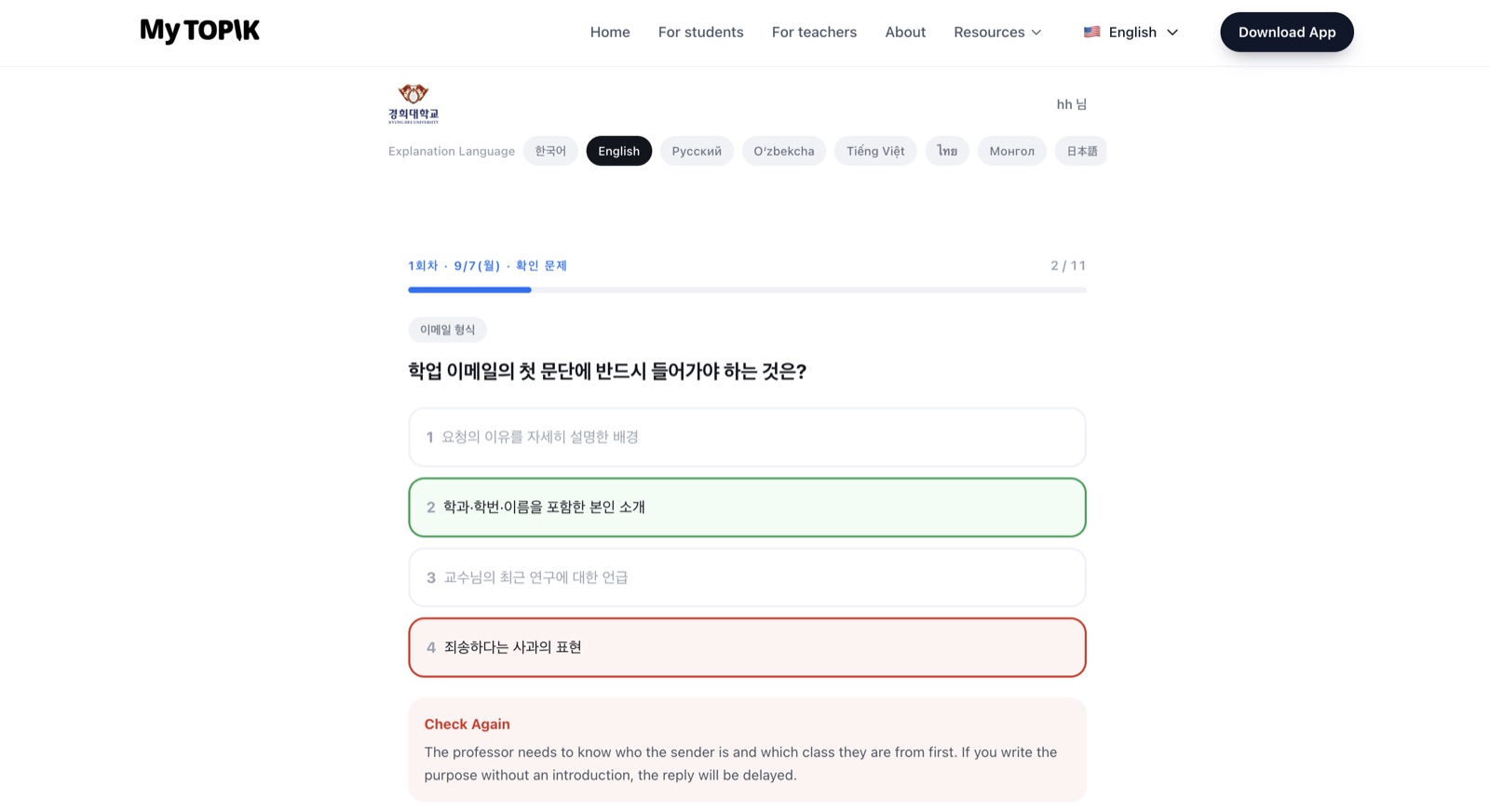
Between the writing blocks the class ran three quiz sets — 40 questions in total, on 서술체, on document structure, and on argument.
The questions stay in Korean, because Korean is what is being tested. Only the explanation a student reads after answering appears in their own language, with ten available. That is exactly the moment at which a shared teaching language stops helping and the student's own starts.
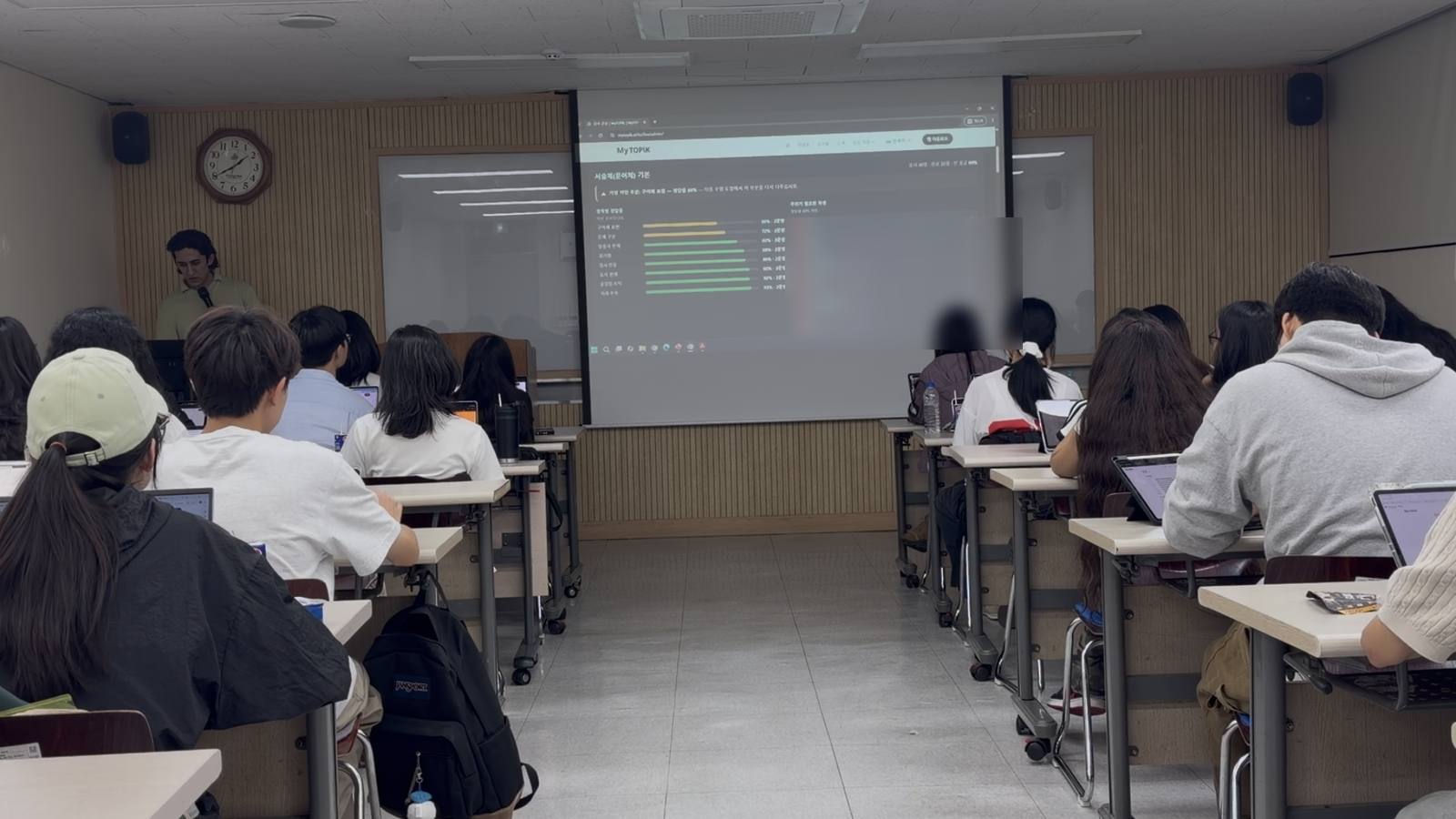
The lecturer's screen reports the room weakest-first: the concepts that broke, the questions that broke them, and the wrong option most students picked. In the ten seconds before the next segment starts, the useful question is never "what did they get right".
What changed
| Earlier programs, partial use | 7–8 September, full | |
|---|---|---|
| Writing tasks per student | 1 per session, 2 across both days | 4, every student |
| Students who completed them | Not all of them | All 44 |
| Corrections returned | After the class, if at all | In class, on every task |
| Quiz questions answered | — | 40, across 3 sets |
| Explanation language | Korean only | The student's own, 10 available |
Four corrected pieces of writing per student instead of two uncorrected ones — same 44 students, same six hours.
The tasks were not made easier to get there. They ran at 250, 400, 300 and 700 characters, thirty minutes each: an email to a professor, a 서술형 answer arguing a position on AI tools in coursework, a summary from a source text, and a one-to-two page mini report.
From pilot to production
Four programs in a year with one university, the fourth requested by its own students and run end to end on the platform, is the point at which a pilot stops being a pilot.
What we were testing is no longer whether the software survives a live lecture hall. It survived six hours of one, twice. What we are building now is the version a department can run on its own, without us in the room.
If you run a program like this
Realtime Class is for universities, language institutes and hagwons that already teach the class and need the correction loop to scale with it. See what MyTOPIK offers schools.